
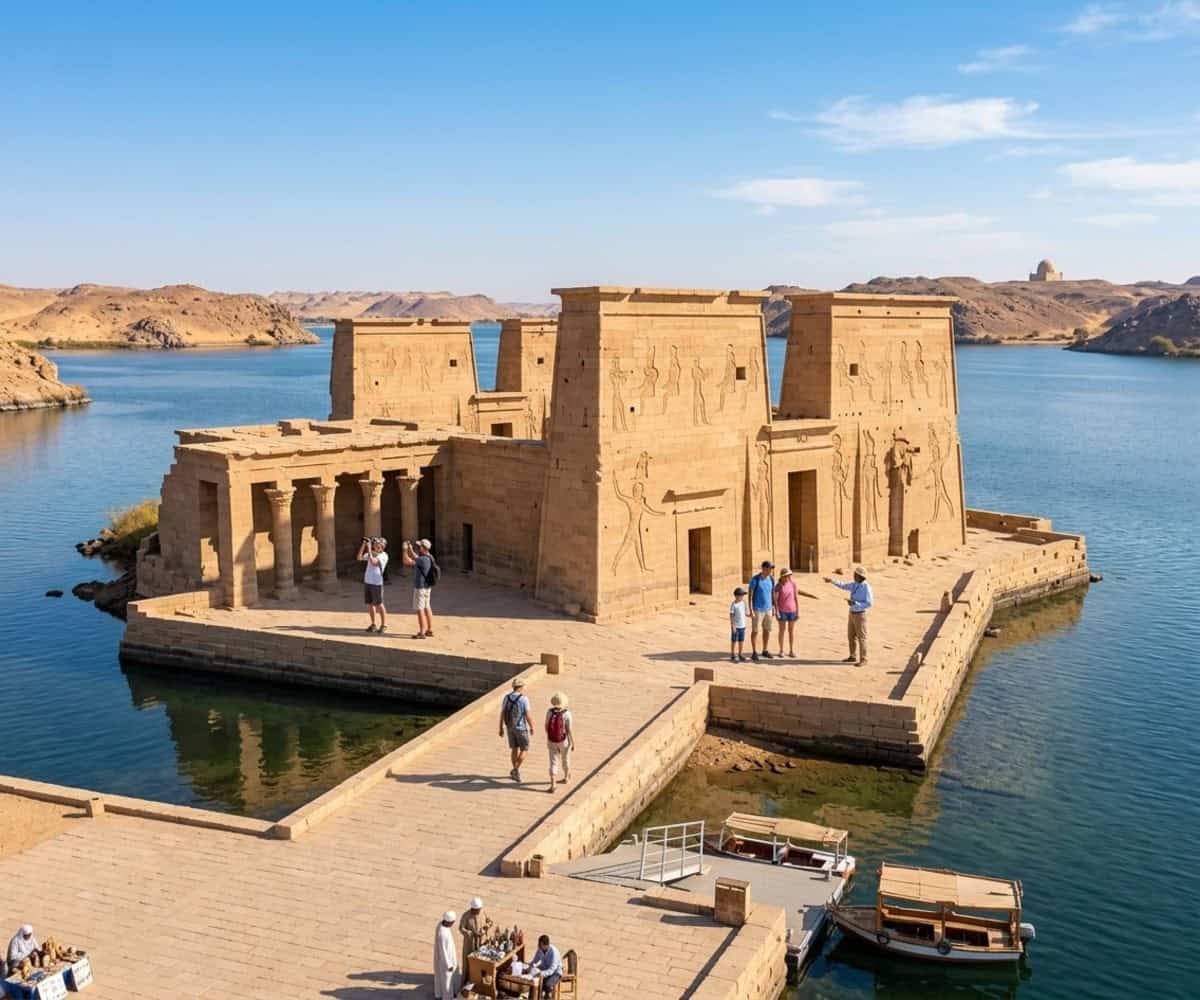
The other Aswan: Why this quiet corner of Egypt deserves more than a Nile cruise stop

Most people arrive in Aswan with a few days of Nile cruising behind them and a head already crowded with temples. Karnak, Luxor Temple, maybe a tomb or two over on the West Bank. Then the boat ties up here and the mood changes. The river is wider. Sand runs almost down to the water, and feluccas drift past small islands as if nobody has anywhere to be. When people tell me about Aswan afterwards, that’s what they bring up first: how little it resembles Luxor.
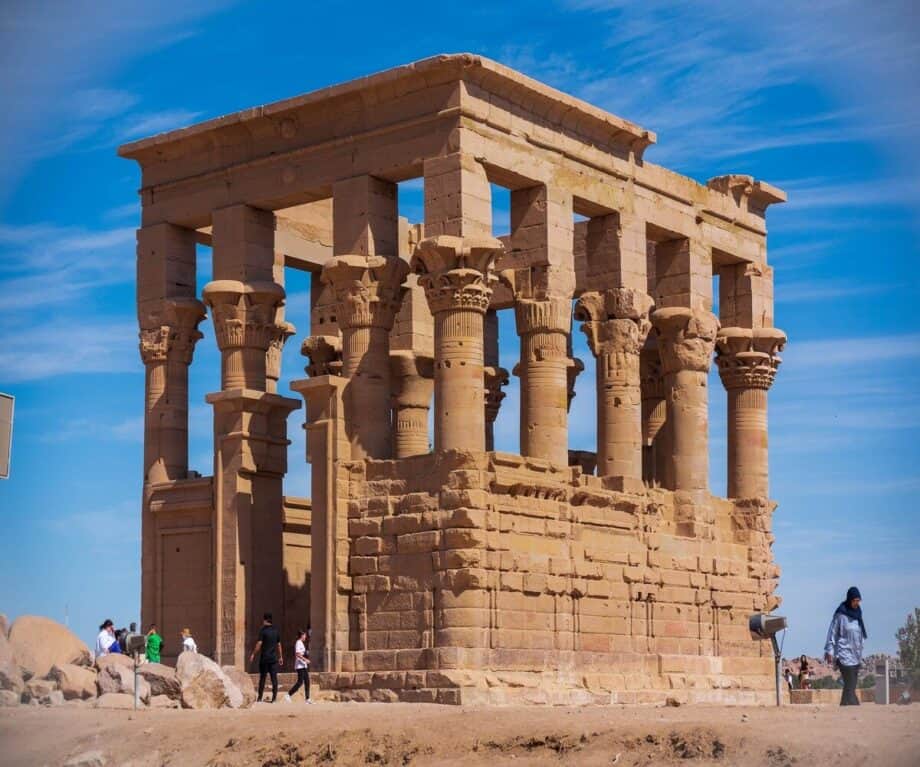
Two nights is the usual, and then it’s Abu Simbel or a flight home. I understand why, but I’d push back on it. One more day can change how the whole trip sits in your memory. Philae is wonderful, no question, and you can’t make sense of modern Egypt without the High Dam. But there’s a second Aswan that people walk right past. It’s Nubian and quieter and feels more personal, and you tend to find it only once you stop checking the time.
Start with the Nile
Yes, obviously you came to see the Nile. But sitting on a hotel terrace looking at it isn’t the same thing as being out on it. A felucca ride is almost embarrassingly basic to describe. You get in, the sail goes up when there’s wind, and the boat moves. That’s it. I’ve come to think the plainness is why it works.
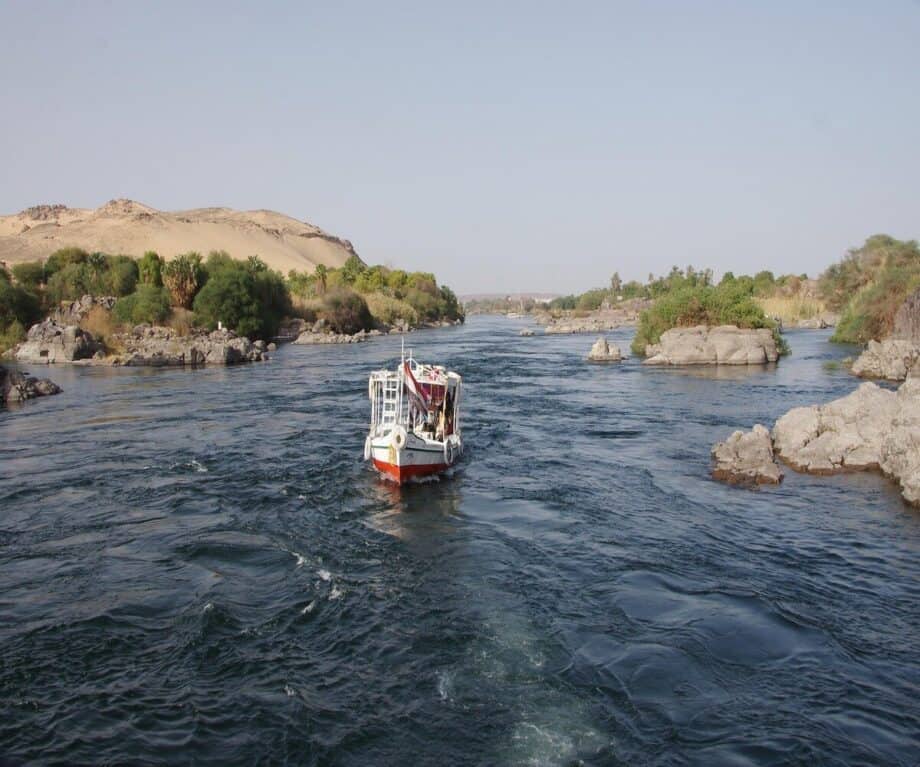
My usual route circles the Botanical Garden on Kitchener’s Island. It’s packed with plants and trees from other parts of the world, and from the water you see it in a way you just don’t from the path. Another one I like heads over toward the Aga Khan Mausoleum, up on the West Bank. Arriving by river beats arriving by car by a wide margin. The desert is right there behind the mausoleum, and the water in front is busy with small boats cutting between the islands. The river here is more than a view between stops. It’s a big part of what Aswan is.
Qubbet El-Hawa is worth the climb
Ask someone what to do in Aswan and Qubbet el-Hawa rarely comes up. I wish it did. It’s a cemetery high on the West Bank, and the walk up is half the reward because of the views you get as you go. The tombs belong to governors and other officials from the Old and Middle Kingdoms. A few are decorated with military campaigns, trading expeditions, hunting and fishing scenes, and the tomb of Sarenput II has coloured reliefs that are well worth a slow look.
My favourite moment up there isn’t even inside a tomb, though. It’s turning around. The Nile curls through the landscape, Elephantine sits in the middle of it, the desert runs off in every direction and the city is laid out below. All at once Aswan makes sense as a place. This was Egypt’s southern gateway for a very long time, the hinge between Egypt and Africa, and standing up there you can see why.
Elephantine is more than an island
Most people give Elephantine an hour. I’d say take two, because it’s a strange little place. It’s right there in the middle of the Nile, a short boat ride from the corniche, and yet the noise of the city drops away almost as soon as you land. The ruins are part of the draw. The other part is the history under them. Long before Aswan was a tourist stop, this island was where Egypt’s border and its trade with Nubia met, and standing on it makes that easy to believe.
There are Nubian villages on the island, and people still live in them. Wander down the lanes and you’ll see houses painted in bright colours, kids kicking a ball about, and somewhere to sit and eat if you feel like stopping. Suddenly it’s not a sightseeing list anymore. It’s a neighbourhood. The Nubians have their own language, music and food, and spending even an hour among them tells you more than another temple would. One thing I always say to travelers: be respectful. This isn’t a theme park. It’s where people live, and you’re a guest.
Everything you need to plan your trip in 2026
🌟 Luxury hotel deals from Booking
🏡 Vacation rentals from VRBO
✈️ Flights from KIWI
🛫 Private jets from Private Jet Finder
🅿️ Airport parking from ParkVia
🛋️ Airport lounges from Priority Pass
🚖 Airport taxis from Welcome Pickups
🚗 Car rentals from Discover Cars
🚐 Luxury RV rentals from RVshare
🚢 Cruises from Cruise Direct
🛥️ Ferries from Direct Ferries
🎫 Attractions tickets from Tiqets
🏞️ Tours from Viator or GetYourGuide
🛡️ Travel insurance from Safety Wing
🏥 Medical insurance from World Nomads
🧳 Luggage from Case Luggage
🛅 Luggage storage from Stasher
📚 Travel guides from Lonely Planet
📕 eBooks from Kindle Unlimited
🎧 Audiobooks from Audible
🎬 Movies from Prime Video UK
🎵 Music from Amazon Music UK
💶 Travel currency from Wise
📱 SIMs from SimOptions
🌐 VPNs from ExpressVPN or NordVPN
🛂 Visas from iVisa
The Nubian Museum changed how I think about Aswan
If you only have time for one museum, I’d pick this one. Heading through southern Egypt, it’s easy to lose track of the fact that Nubia has a history and identity of its own, much bigger than the few colourful villages that end up on most itineraries. The museum puts that back in front of you.
It grew out of the international campaign to save Nubian monuments once the High Dam was built, and it opened in 1997 with thousands of objects covering Nubian and Egyptian history and culture. I prefer to go before the villages rather than after. The houses, the crafts and the traditions you see afterwards make a lot more sense when you’ve got the longer story in your head, rather than treating them as a pleasant stop before lunch.
The building deserves a mention too. It’s made with local sandstone and pink granite and borrows from Nubian architecture, so it doesn’t look like something airlifted in from elsewhere. It looks like it was always going to be there.
Kalabsha tells another story
Kalabsha gets skipped fairly often, mostly because it’s less convenient than Philae. If you can spare the time, go. It’s a Roman-period temple, mainly dedicated to the Nubian god Mandulis, and the reason it matters for Aswan is what happened to it: when the High Dam’s waters threatened the original site, the temple was taken apart and put back together at New Kalabsha.
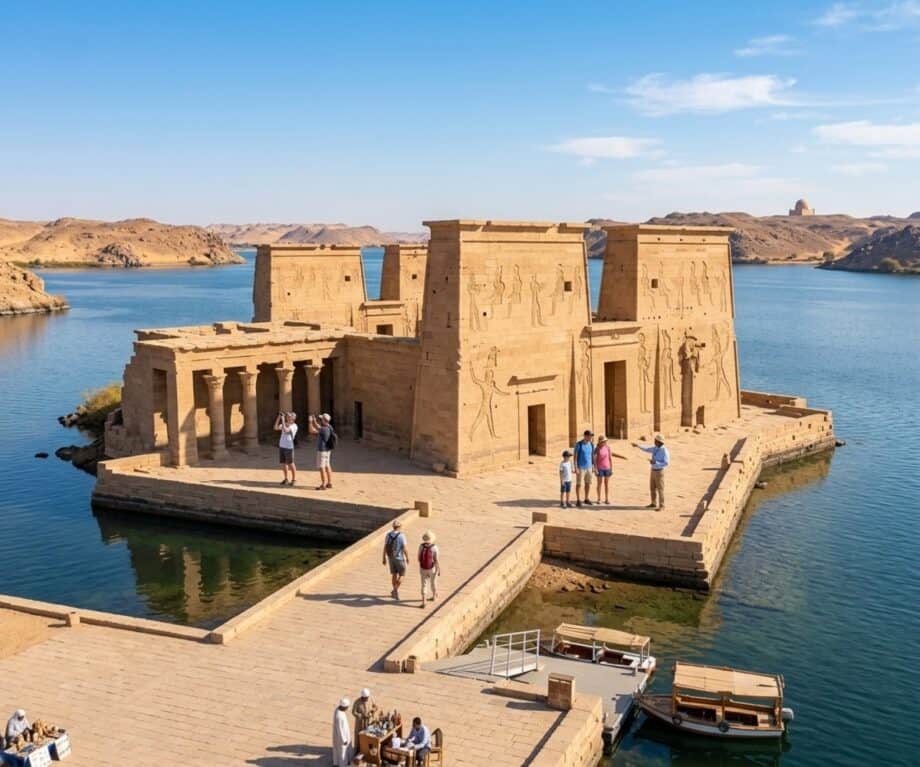
That detail changes how it feels to stand there. You’re looking at an old temple, yes, but also at what’s left of one of the largest archaeological rescue efforts ever attempted. It links straight back to Philae and the Nubian Museum. Each one gives you a different piece of what happened when this landscape was reshaped.
Then there’s St. Simeon
After several stops of temples and museums, I like switching the scenery completely. St. Simeon Monastery is on the West Bank, away from the Nile and surrounded by desert. It’s medieval, and was part of Christian monastic life in southern Egypt.
That’s the reason I’d include it. Aswan isn’t just pharaonic, and it isn’t just Nubian or just riverside. There’s thousands of years of history layered in here, and St. Simeon is a reminder of how many different chapters there are. Getting there feels different too. You head away from the river and into the desert, and if you’ve had a few days of temples, the change of scenery is a relief.
Why the Unfinished Obelisk deserves more than a photo
Most people are in and out of the Unfinished Obelisk in about five minutes, which seems a bit hasty to me. It was never completed, true, but the better part is that the quarry still shows how the work was done. Cracks appeared in the granite and the project was dropped, and the trenches and tool marks are still there, along with some of the ancient stone tools themselves.
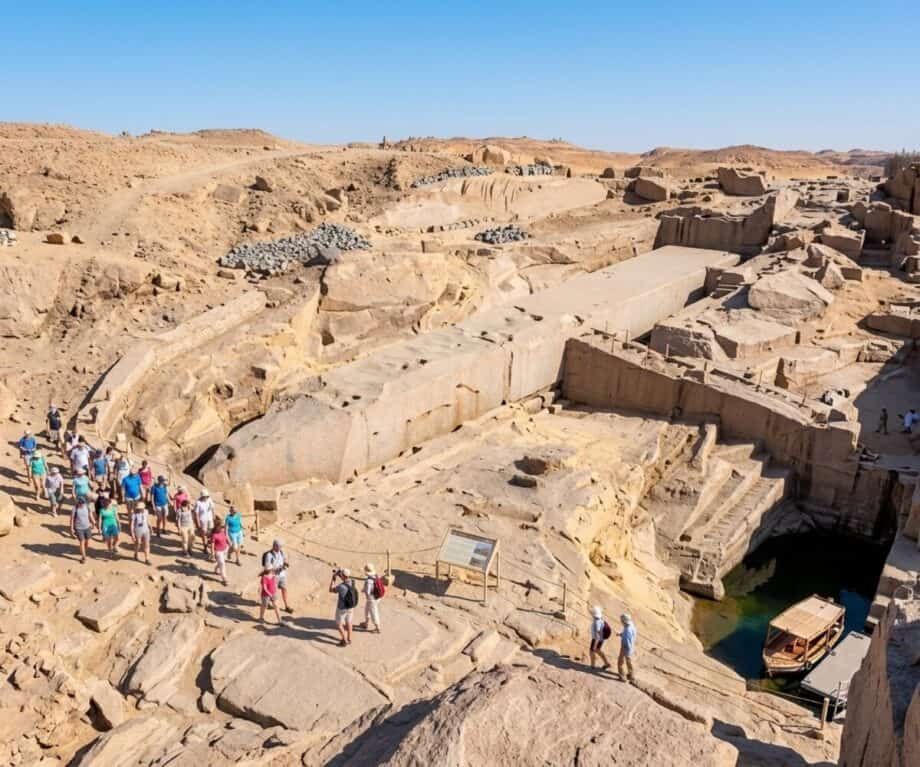
A good guide helps a lot here. On your own, it looks like a very big, very cracked rock. Have someone point out the pounding marks and explain how the stone was worked, and it starts to look like somebody’s job.
And then — you just sail
It might sound strange after pages about tombs and temples, but one of my favourite parts of Aswan is when there’s nothing to see. A felucca, the river, and a late afternoon when the light goes soft and the desert turns a bit warmer.
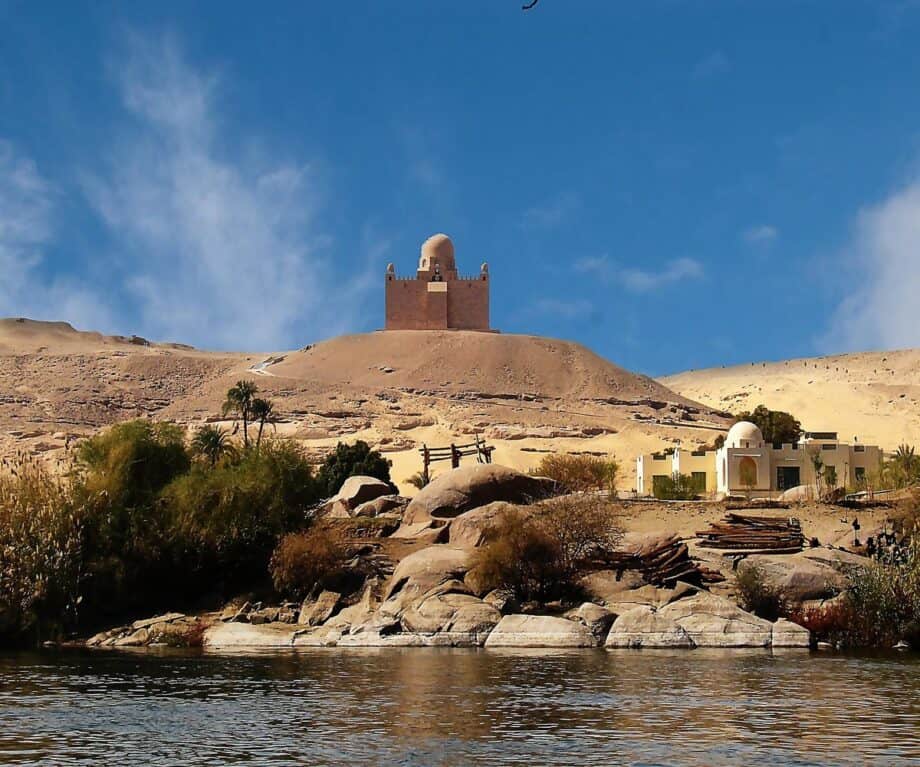
A sail past the Botanical Garden or toward the Aga Khan Mausoleum doesn’t have to come with a running commentary. I’d say it’s better without one. After a few days of sightseeing, most people don’t need another explanation. They want to sit down and watch the town go by.
That, to me, is a big reason Aswan suits luxury travel. It’s not about extravagance. It’s that a day here can be built around the person rather than the checklist. If someone wants archaeology, there’s plenty. If Nubian culture interests them, they can spend longer with it. If they’ve had enough temples, we slow down. And if the plan is an hour on a felucca with nothing booked afterwards, that’s a perfectly good plan.
Aswan isn’t just where the Nile journey ends
This is the mistake I notice most. People treat Aswan like an epilogue. Luxor was the main event, and Aswan is where you put your feet up for two nights on the way to Abu Simbel. I don’t see it that way.
Aswan has its own character. Egypt runs into Nubia here, and the desert comes right down to the river. You can walk from an ancient temple to a street where people are just doing their shopping, and the layers of history (pharaonic, Christian, Islamic, Nubian) all sit close together. It’s also the one stop on a Nile trip where the river feels like the main event.
Go to Philae, by all means. The High Dam is worth seeing too, and so is Abu Simbel if your schedule can handle the early start. But I’d also climb up to Qubbet el-Hawa, give the Nubian Museum a couple of hours, and take the boat across to Elephantine. Kalabsha, St. Simeon and the quarry at the Unfinished Obelisk can go on the list if you have time left.
Last of all, and I mean this seriously, set aside an afternoon for the water. Get on board, let the sail catch what wind there is, and look back at the desert and the islands. After all those temples and monuments, I wouldn’t be surprised if that’s the bit you remember.
If Aswan has a secret, it’s probably this. You don’t need another sight on the list. You need another day.

Sherif Khalil
Sherif Khalil is the Chairman and Founder of Dunes & Beyond. Dunes & Beyond is a travel company that provides luxury tours, where tourists experience excitement and thrills, but with a ‘five star’ attitude, with a focus on Egypt as well as Jordan, Sudan and Morocco. If you would like to be a guest blogger on A Luxury Travel Blog in order to raise your profile, please contact us.
Did you enjoy this article?
Receive similar content direct to your inbox.

I’ve been to Aswan twice and missed out on half of what’s here.
I never realised there was so much more to Aswan beyond Philae and Abu Simbel.