Is Iceland safe to drive yourself?

The car rental counter at Keflavík Airport is always busy. Visitors collect their keys, load up on insurance options they half-understand, and drive into a landscape that looks, from the terminal window, like it should be easy. Wide roads, no traffic, open sky.
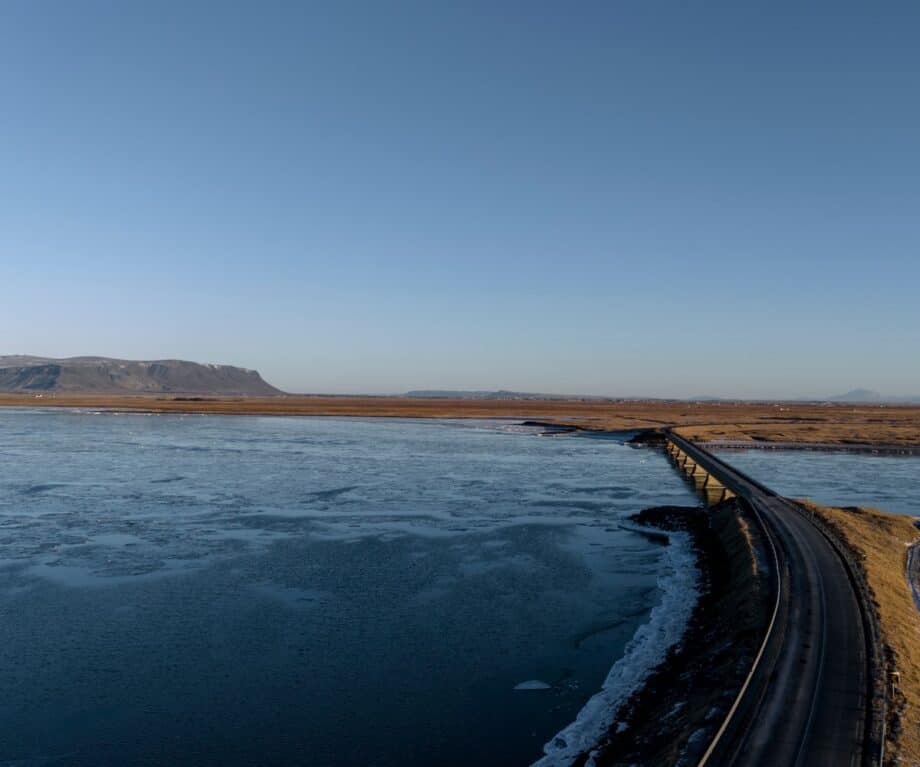
Forty minutes later, somewhere on a coastal highway, the wind picks up. Not a gentle breeze — a sideways force that pushes the car half a lane over. The weather app still says partly cloudy. The sky disagrees. And somewhere ahead, a single-lane bridge appears with no warning, and another car is already on it.
This is Iceland. It is absolutely safe to drive — but it is nothing like driving anywhere else you have been.
The honest answer: Yes, but…
Let’s get this out of the way: Iceland is not a dangerous country to drive in. The roads are well-maintained, the infrastructure is modern, crime is virtually nonexistent, and Icelanders are calm, courteous drivers. If you have experience driving in varied conditions and you do your homework, self-driving is perfectly viable.
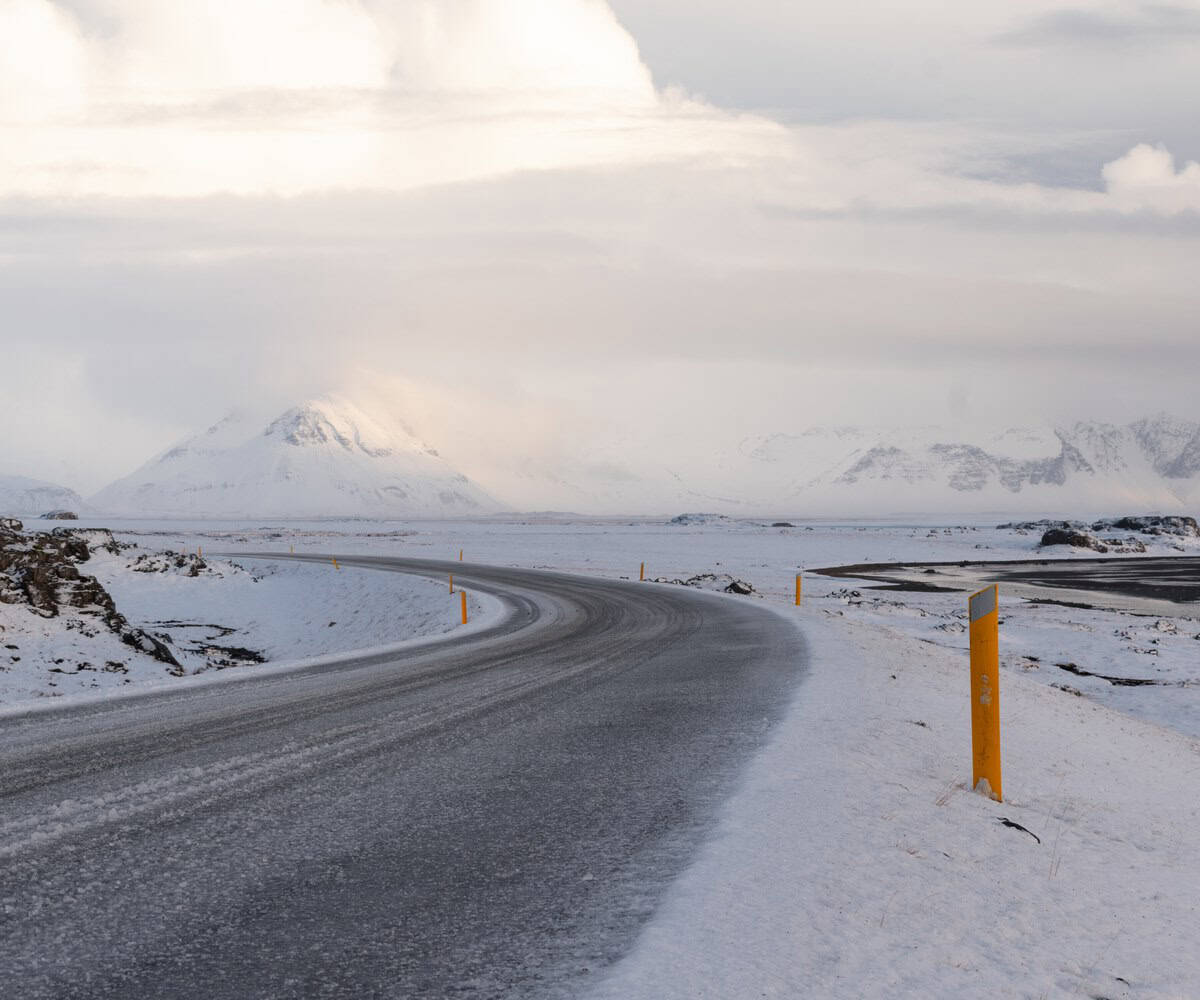
But Iceland’s challenges have nothing to do with the roads and everything to do with what happens above and around them. The weather is the variable that turns a pleasant drive into a white-knuckle experience — and it shifts without consultation. A clear morning can become a horizontal rain shower by noon and a snowstorm by mid-afternoon, regardless of the season.
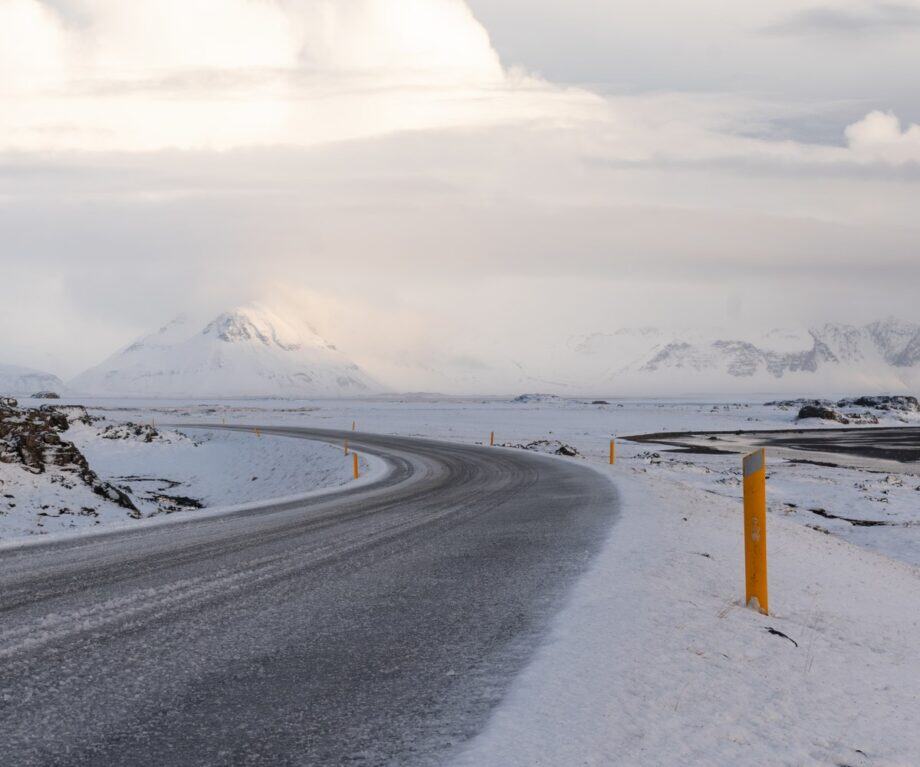
What makes it genuinely tricky is that safety here is never about a single factor. It is the combination of wind speed, road surface, and vehicle type that determines whether a stretch of road is manageable or not. A 20 m/s wind on dry asphalt in a heavy SUV is one thing. That same wind on an icy gravel road in a compact rental is something else entirely. Locals cross-reference three different government websites — for weather, road conditions, and safety alerts — before every drive. Most visitors don’t even know those websites exist. For a complete breakdown of what you need to know behind the wheel, we’ve put together a detailed driving guide on our blog.
What the reels don’t show you
There is a version of Iceland that lives on social media: empty roads stretching toward volcanoes, drone shots of waterfalls, a sense of effortless freedom. It is a beautiful version, and it is not untrue. But it edits out everything between the highlights.
It edits out the roundabouts in Reykjavík where the priority rules work opposite to most of Europe and North America, catching every tourist off guard. It edits out the gravel roads that kick rocks into windshields — damage that basic insurance rarely covers. It edits out the F-roads, Iceland’s highland tracks, where a 4×4 is mandatory by law and river crossings can shift depth by the hour depending on glacial melt.
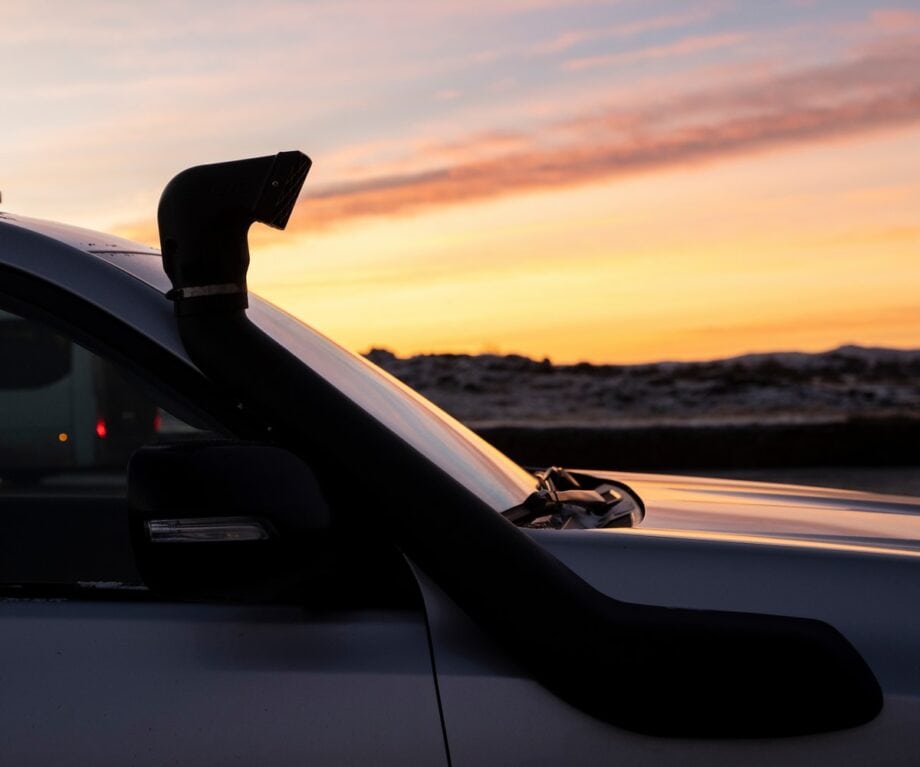
It edits out the rental car door that got caught by a gust and bent backwards on its hinges — a remarkably common occurrence that insurance companies have learned to write exclusions for. And it edits out the hours spent researching routes, checking forecasts, recalculating when conditions change, and navigating without reliable mobile signal in the east and the north.
Self-driving in Iceland is not a road trip in the usual sense. It is a project. An engaging one, certainly — but a project that requires preparation, flexibility, and a willingness to make real-time decisions with imperfect information.
The real cost of self-driving
Most travelers assume that renting a car is the budget-friendly option. In Iceland, that assumption deserves a closer look.

A proper rental — and by proper, we mean a vehicle that can handle Icelandic conditions with appropriate insurance — adds up quickly. The base rental rate is just the beginning. Gravel protection, sand and ash coverage, wind damage, tire protection: each is an add-on, and each exists because these are common occurrences, not edge cases. Add fuel, the new kilometric road tax introduced in 2026, parking fees at every major attraction, and the hidden cost of mistakes — a wrong insurance choice, an accidental F-road excursion — and the total rarely looks like the bargain it seemed at the booking stage.
When you place that figure next to the cost of a private guided experience, the gap is smaller than most people expect. And the comparison is not really between two prices — it is between logistics and immersion. Between spending your holiday managing a complex driving environment, and spending it actually experiencing the country.
Everything you need to plan your trip in 2026
🌟 Luxury hotel deals from Booking
🏡 Vacation rentals from VRBO
✈️ Flights from KIWI
🛫 Private jets from Private Jet Finder
🅿️ Airport parking from ParkVia
🛋️ Airport lounges from Priority Pass
🚖 Airport taxis from Welcome Pickups
🚗 Car rentals from Discover Cars
🚐 Luxury RV rentals from RVshare
🚢 Cruises from Cruise Direct
🛥️ Ferries from Direct Ferries
🎫 Attractions tickets from Tiqets
🏞️ Tours from Viator or GetYourGuide
🛡️ Travel insurance from Safety Wing
🏥 Medical insurance from World Nomads
🧳 Luggage from Case Luggage
🛅 Luggage storage from Stasher
📚 Travel guides from Lonely Planet
📕 eBooks from Kindle Unlimited
🎧 Audiobooks from Audible
🎬 Movies from Prime Video UK
🎵 Music from Amazon Music UK
💶 Travel currency from Wise
📱 SIMs from SimOptions
🌐 VPNs from ExpressVPN or NordVPN
🛂 Visas from iVisa
Why luxury travelers are choosing a different route
At Lilja Tours, we have noticed a clear pattern over four years of designing private tours across Iceland: the travelers who book with us are not people who couldn’t handle a rental car. They are experienced, well-traveled people who have decided that driving is simply not the best use of their time in a country this extraordinary.
What draws them to a private guided experience is not just comfort — it is the combination of safety, local expertise, and a level of flexibility that most people associate only with self-driving.
This is the part that surprises people: a private tour is not a fixed bus route. There is no rigid schedule, no group consensus, no “we have to leave now because the next stop is timed.” A private guide adapts to you — your pace, your interests, your energy on any given day. If the Northern Lights forecast suddenly looks promising in a direction you hadn’t planned, we change course. If you want to spend an extra hour at a waterfall because the light is extraordinary, we stay. If conditions deteriorate on one route, we know three alternatives and which one is best right now.
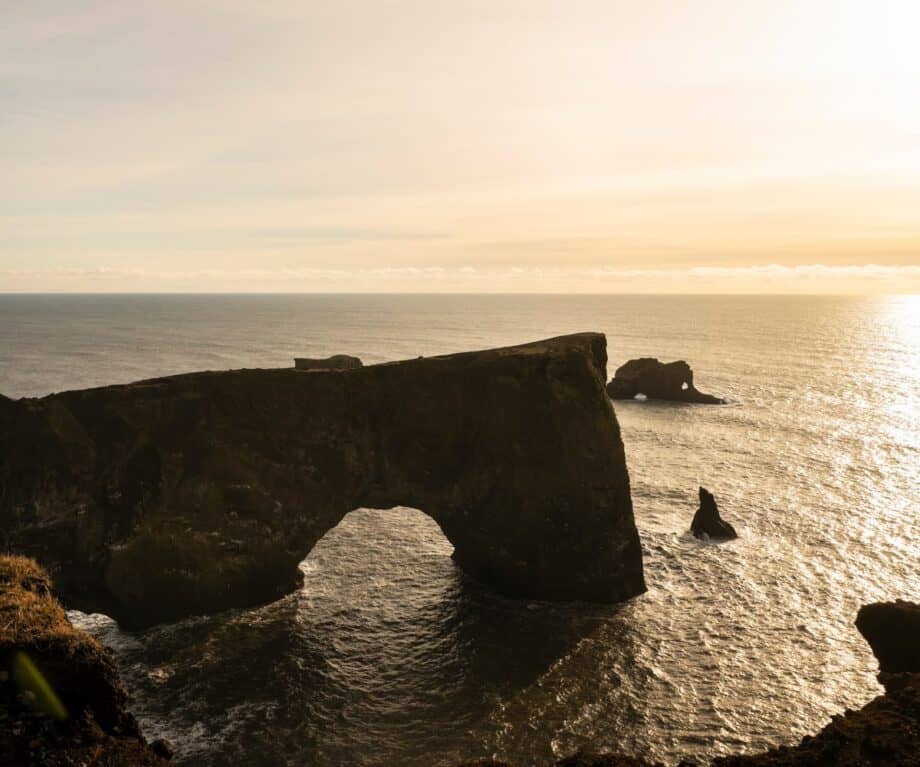
You get the safety and comfort of a guided tour with the same flexibility of a self-drive trip — but with someone beside you who reads the weather, knows the roads, speaks the language, and has driven these routes hundreds of times in every season. Someone who knows that the glacier hike is better approached from the east side this week because the ice has shifted.
There is also the simple pleasure of being a passenger in a country that was made to be watched. Iceland’s landscapes deserve your full attention — the way the light moves across a lava field, the moment a glacier comes into view between two ridges. When you are not gripping the steering wheel through a crosswind, you actually see it all.
For a deeper look at how the different ways of experiencing Iceland compare, we have written a detailed comparison of self-driving, small group tours, and private guided tours, that breaks down the practical trade-offs.
Iceland rewards those who show up ready
Iceland is extraordinary precisely because it is wild and unpredictable. The volcanic landscapes are young, the weather is unscripted, and the best moments often come from conditions you didn’t plan for — a sudden break in the clouds over a glacier lagoon, an aurora appearing on a night the forecast said was hopeless.

The question was never really whether you can drive yourself in Iceland. You can. The question is whether navigating logistics is how you want to spend your time in one of the most visually staggering places on the planet — or whether you would rather arrive ready to be fully present, with someone who knows this island intimately making sure you don’t miss a thing.

Julien – Lilja Tours
Julien Achache is Owner of Lilja Tours. Lilja Tours is a boutique private tour operator based in Reykjavík, Iceland, specializing in bespoke private tours with a perfect 5-star rating across platforms. If you would like to be a guest blogger on A Luxury Travel Blog in order to raise your profile, please contact us.
Did you enjoy this article?
Receive similar content direct to your inbox.