
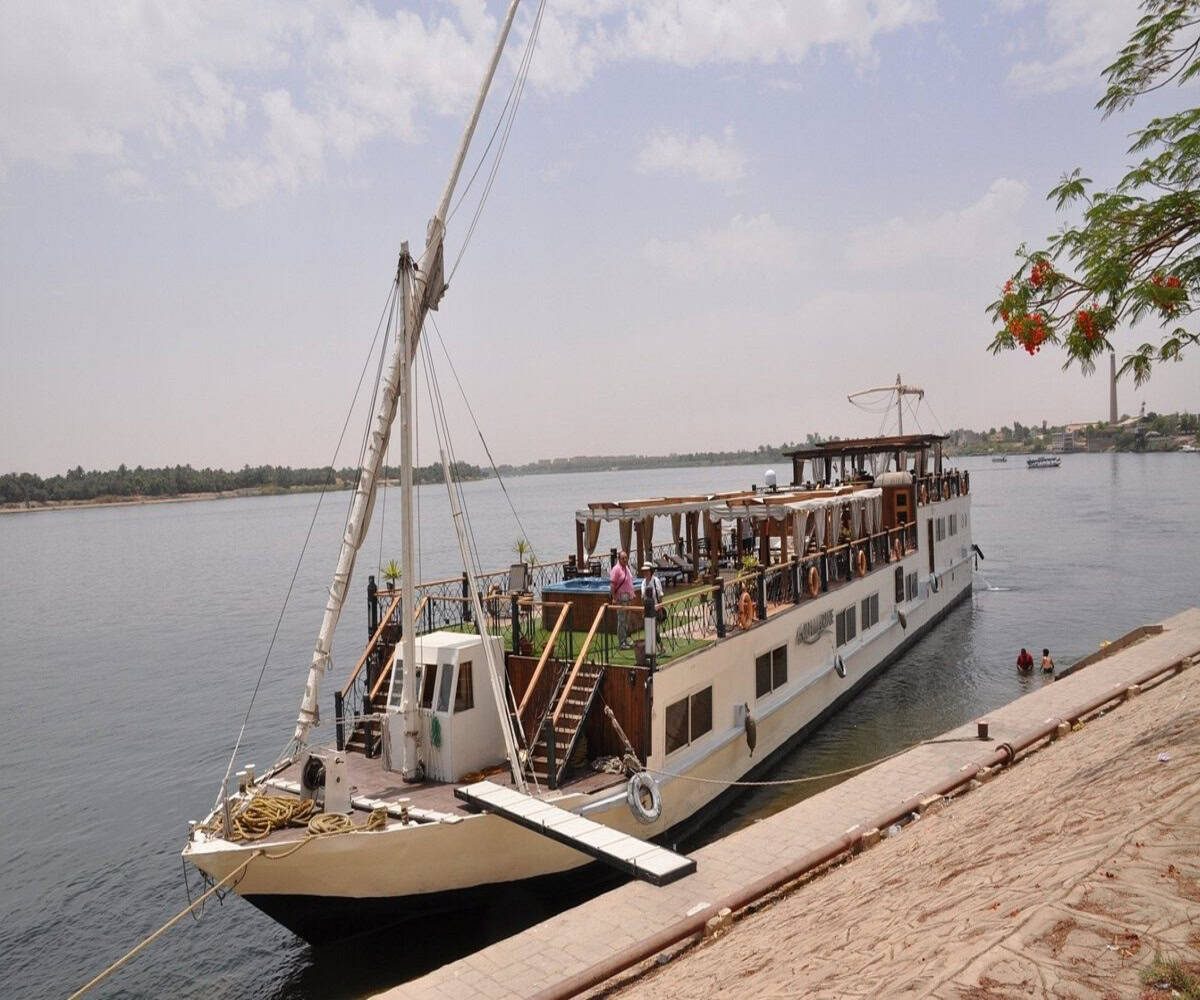
Dahabiya or Nile cruise? How to pick the right boat for the Nile

You can describe the Nile all day and still not get across what it’s like to be on it. The river moves slowly, palms line the banks, and every so often there’s a farmer in a field or a few kids waving from the shore. After Cairo’s traffic and crowds, it feels like another country. Most people tell me the Nile is the part of their Egypt trip they look forward to most. So the next question matters: ship or dahabiya?
I get asked which is better constantly, and I never give a short answer, because there isn’t one. They cover the same river but feel nothing alike once you’re onboard.
I’ve spent a lot of years arranging luxury trips in Egypt, and the boat shapes how a guest remembers the whole country more than most people expect. Paying more doesn’t guarantee a better fit. A smaller boat isn’t automatically the nicer one either.
Start with the boat itself
A traditional Nile cruise ship is basically a hotel that floats. Several decks, a reception desk, a restaurant or two, a lounge, usually a pool, and a spread of cabin categories. Some have a bar or evening entertainment on top of that.
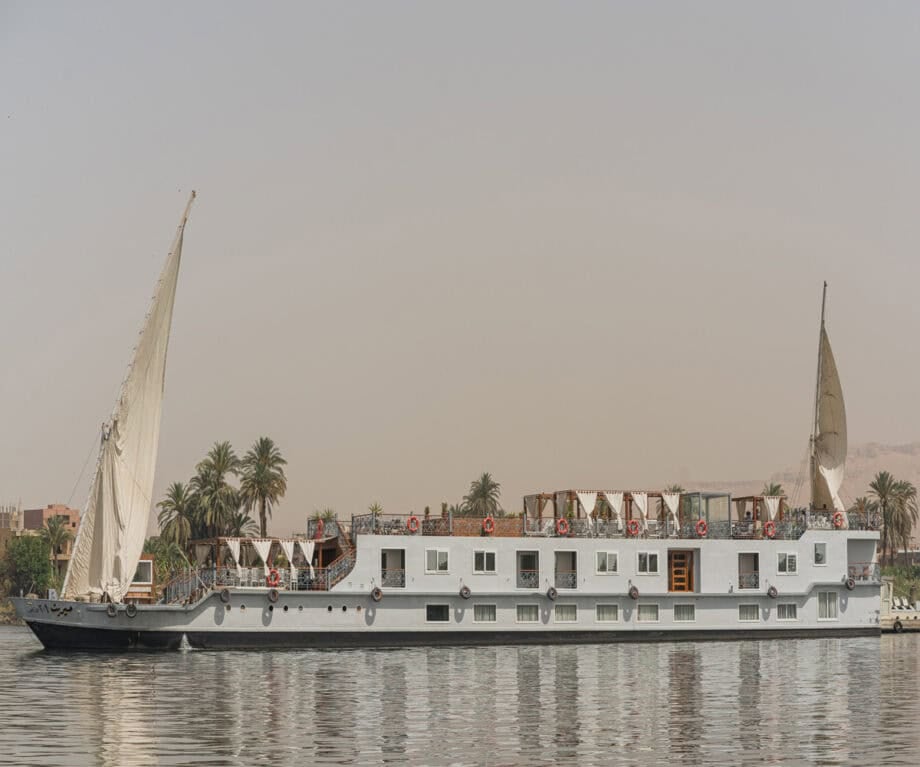
If you like everything within reach, that’s easy. There’s room to wander, somewhere to sit wherever you are, and other passengers to talk to. Plenty of guests enjoy that side of the trip as much as the temples.
A dahabiya works differently. It’s a much smaller sailing boat with a handful of cabins, modelled on the elegant vessels that once carried travellers up the Nile, though today’s versions come with modern comforts. Fewer people means quieter shared spaces, and guests tend to spend their time watching the river rather than going from one facility to the next.
Standards vary, though, and this matters. Some dahabiyas are gorgeous boutique boats with big suites and properly thought-out interiors. Others are plainer. Large ships are no different. So I’d always look at the specific boat rather than trusting the category or the brochure photos.
How the days feel
Pace is the biggest difference, in my view. A cruise ship works to a timetable. Sailing times are fixed and the excursions are slotted in around them, whether you’re going from Luxor to Aswan or the other way. If you’re short on days and want the main sites in a sensible order, that suits you well. Nobody’s wondering what happens at nine tomorrow. A lot of first-timers find that a relief.
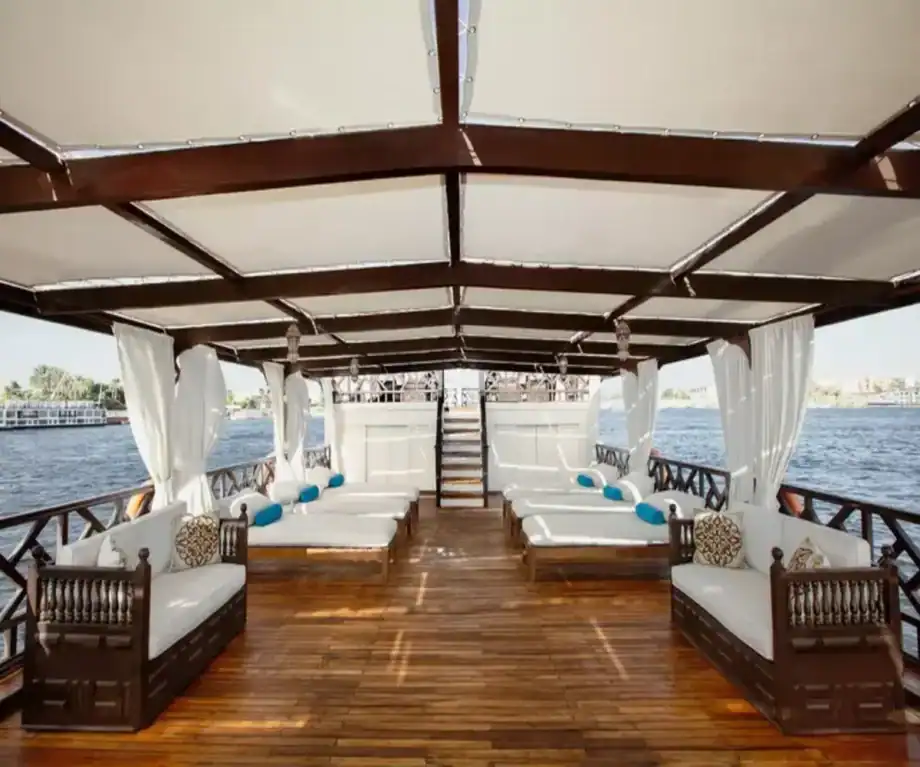
A dahabiya is a different animal. Sailing isn’t the commute between temples, it’s half the reason you’re there. Some afternoons the boat just stops. It might be tied up against a riverbank or off an island, and nobody’s in a hurry to move it, though that depends on the route and the weather. The wind decides a lot, since these are sailing boats at heart, and when it drops, some boats switch on a motor or get a tow from a tug. How much of each? That changes from boat to boat, so ask the operator.
Some people want the landscape to slide past with nowhere to be. For them, the slower boat wins easily.
The sightseeing
Both stop at the same big names in Upper Egypt: Luxor, Karnak, Edfu, Kom Ombo and the sites around Aswan. What differs is how you see them.
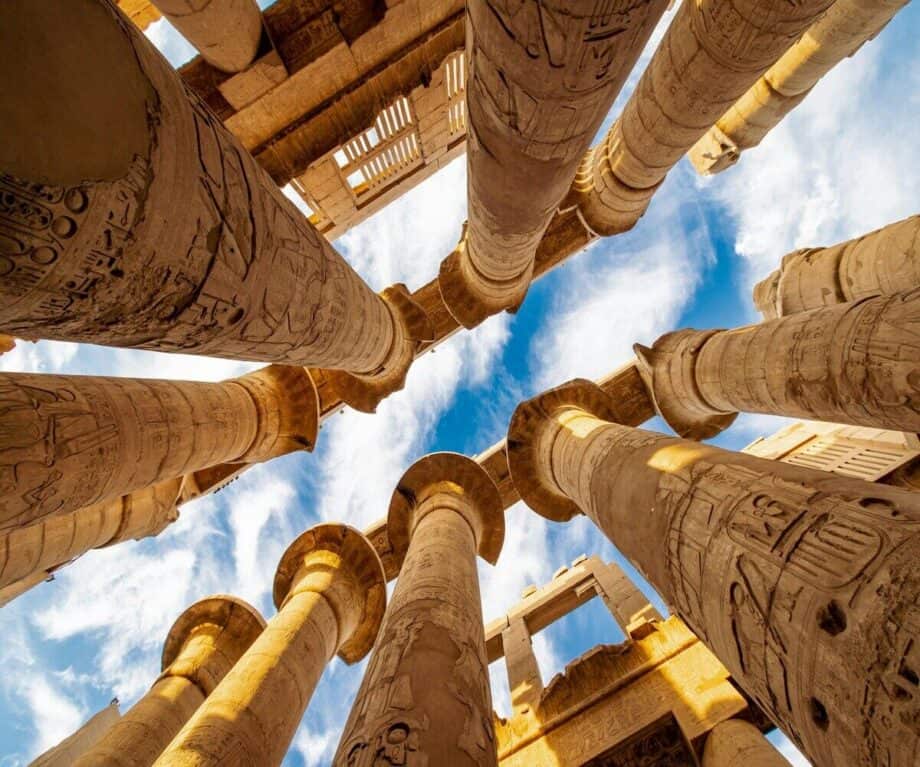
On larger ships, excursions follow the ship’s own comings and goings, and you’ll often be with a group, although some cruises do offer private guiding. Don’t picture fifty people and a flag.
One thing people like about dahabiyas is that they can sometimes work in smaller, quieter stops along the river, depending on the boat and the route. If you want something off the standard track, that matters. Just don’t read too much into the size of the boat. It doesn’t make every visit private, and it can’t tie up wherever takes your fancy, because navigation, mooring permissions and the weather all limit where it can go.
Ask to see the actual route before you book. You want to know which places are on it, how the excursions are run, and whether you’ll have a guide to yourself or share one with others. It sounds dull, but those details change the trip more than most people expect.
Everything you need to plan your trip in 2026
🌟 Luxury hotel deals from Booking
🏡 Vacation rentals from VRBO
✈️ Flights from KIWI
🛫 Private jets from Private Jet Finder
🅿️ Airport parking from ParkVia
🛋️ Airport lounges from Priority Pass
🚖 Airport taxis from Welcome Pickups
🚗 Car rentals from Discover Cars
🚐 Luxury RV rentals from RVshare
🚢 Cruises from Cruise Direct
🛥️ Ferries from Direct Ferries
🎫 Attractions tickets from Tiqets
🏞️ Tours from Viator or GetYourGuide
🛡️ Travel insurance from Safety Wing
🏥 Medical insurance from World Nomads
🧳 Luggage from Case Luggage
🛅 Luggage storage from Stasher
📚 Travel guides from Lonely Planet
📕 eBooks from Kindle Unlimited
🎧 Audiobooks from Audible
🎬 Movies from Prime Video UK
🎵 Music from Amazon Music UK
💶 Travel currency from Wise
📱 SIMs from SimOptions
🌐 VPNs from ExpressVPN or NordVPN
🛂 Visas from iVisa
What it’s like onboard
On a bigger ship you’ve got more to work with. A restaurant with set meal times, a lounge or bar, often a pool on the top deck, and sometimes entertainment in the evening. Families especially tend to like that, because there’s space and you aren’t relying on a couple of small shared areas.
A dahabiya is looser. Meals are usually in a smaller, more intimate setting, and a lot of guests spend the day on deck, reading or chatting or doing nothing much. With fewer passengers, you usually get to know the crew better.
Service doesn’t come down to boat size, though. I’ve seen big ships look after people beautifully, and I’ve seen small boats let guests down because the crew or management weren’t up to it.
Food deserves a couple of questions too. Is it cooked fresh onboard? Do the menus cover both Egyptian and international dishes? Can they handle dietary needs? Ask those whichever type you choose.
Privacy
This is where a dahabiya tends to win. Fewer cabins and fewer passengers make it calmer. There’s less coming and going, and the shared areas don’t feel like a hotel lobby. Couples, honeymooners and anyone celebrating something tend to like that, and so do people who just want a quiet trip with more personal service.
A bigger ship is more sociable. You’ll run into other guests at mealtimes, on the sun deck and during excursions. Some people love that, because they like meeting other travellers and having a bit of life around them.
Honestly, neither one wins outright. It depends on who’s travelling.
Nights and price
If your dates are fixed, a cruise ship is easier to plan around. Most run three or four nights between Luxor and Aswan, although longer sailings and other routes are out there. Dahabiyas tend to take a bit longer, often four or five nights, but not all of them do, so read the actual sailing programme rather than assuming.
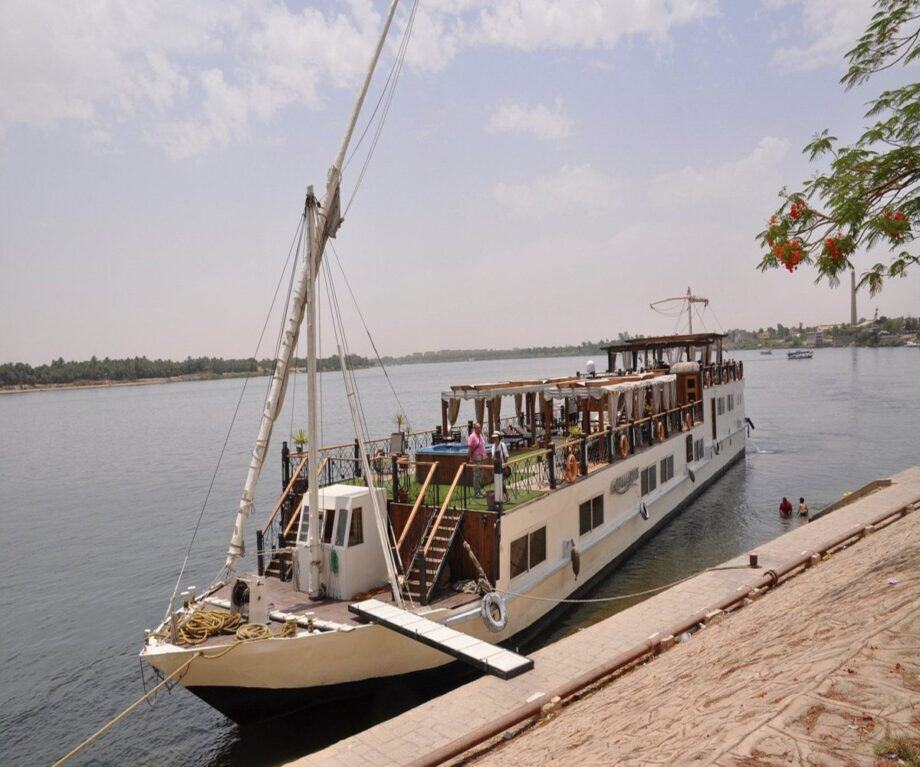
Smaller doesn’t mean cheaper, and that catches people out. Fewer cabins and a more personal, boutique style of operation push some dahabiyas well above a big ship’s price. Big ships vary too, from comfortable mainstream boats to high-end luxury ones, so comparing headline rates without checking what’s included will mislead you.
When I read an offer, the cabin rate is only where I start. After that it’s the boat itself, then meals, drinks, excursions, entrance fees, how the guiding is set up and any extras. Two packages can look identical on paper and feel nothing alike once you’re there.
Who I’d send on a dahabiya
If you care about privacy, a slower pace and a more intimate feel, a dahabiya is usually where I’d point you. Couples, honeymooners and anyone celebrating something tend to love it, particularly if they like being near the river and can live without a long list of facilities. People who’ve already been to Egypt and want a different take on the Nile often like it as well.
I wouldn’t choose one just because it sounds exclusive, though. You should be happy with a smaller setting and realise the facilities won’t match a big cruise ship’s.
Who I’d send on a traditional cruise
A larger cruise is often the better choice if you’d like a structured programme, more facilities and a livelier atmosphere. First-time visitors who want the main temples plus a comfortable trip between Luxor and Aswan do well on one. Families may like the extra space, depending on the ship and the children’s ages. And if you’d rather have a choice of restaurants, a pool and big public areas in a conventional hotel-style setting, a good ship can be excellent.
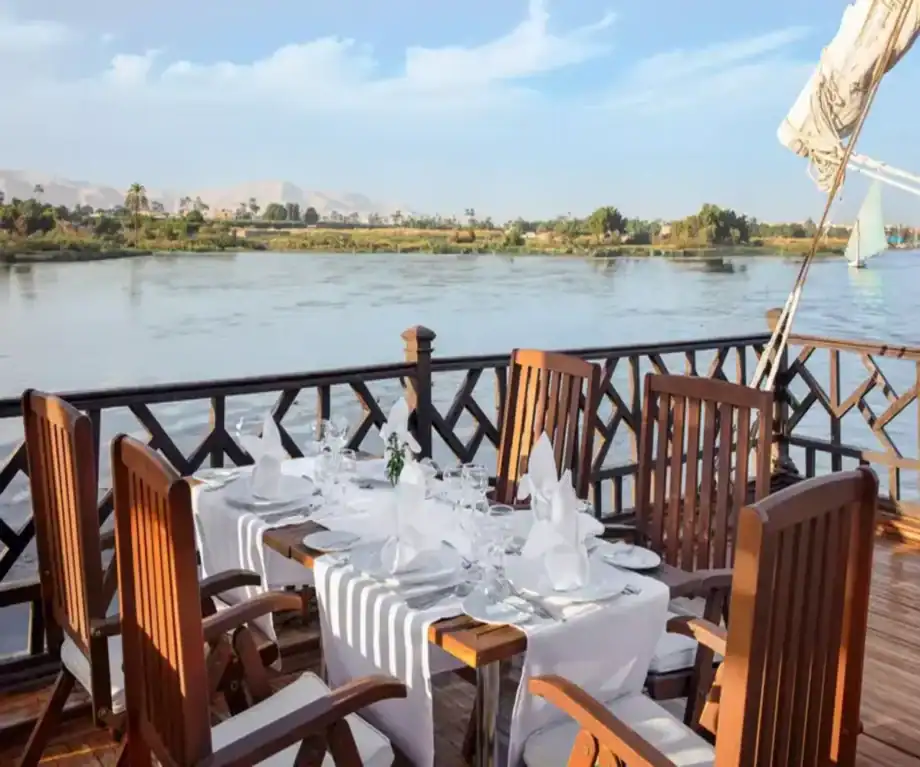
There’s a practical point too. If your holiday is short, an established sailing programme makes it much easier to fit the Nile into a wider Egypt itinerary.
What I’d ask before booking
Whichever way you’re leaning, there are four things I’d check first.
1. Get the name of the actual vessel. “Luxury cruise” and “boutique dahabiya” are descriptions, not boats. Once you have a name, see whether the photos you’ve been shown are genuinely of that boat, cabins and public areas included.
2. Next comes the itinerary, which I’d read slowly. It should tell you how many nights you’re onboard and which sites are included, and you need to know whether the excursions are private or shared. And if a personal Egyptologist matters to you, don’t rely on a verbal promise. Get it in writing.
3. Ask about the cabin. Size, position, windows, balcony, bathroom and condition all matter, and on a smaller boat the gap between categories can be particularly noticeable.
4. And find out exactly what the price includes, because meals, drinks, entrance fees, transfers and guiding are handled differently by different operators.
They sound like obvious questions, but they can save you from arriving onboard and finding the trip isn’t quite what you’d pictured.
Choosing for how you travel
The way I see it, the Nile is something to enjoy rather than tick off. There’s real pleasure in watching it from the deck, seeing everyday life on the banks and having time to take in the landscape between the big monuments.
If you want a quiet, slow, private trip, that’s the dahabiya. If you’d rather have things to do and people to meet, that’s a ship. Either can be wonderful, provided the boat and itinerary suit the traveller.
If someone asked me which to choose, I’d start by finding out who’s going. Is it two people after some peace, or a group that would rather have a bit of buzz? Would they trade facilities for privacy? And how many days do they have, and what are they hoping to come home with?
There’s no single answer, which is why it’s worth thinking it through before you book. It’s the same river whichever boat you pick. What changes is how close you feel to it.

Sherif Khalil
Sherif Khalil is the Chairman and Founder of Dunes & Beyond. Dunes & Beyond is a travel company that provides luxury tours, where tourists experience excitement and thrills, but with a ‘five star’ attitude, with a focus on Egypt as well as Jordan, Sudan and Morocco. If you would like to be a guest blogger on A Luxury Travel Blog in order to raise your profile, please contact us.
Did you enjoy this article?
Receive similar content direct to your inbox.